

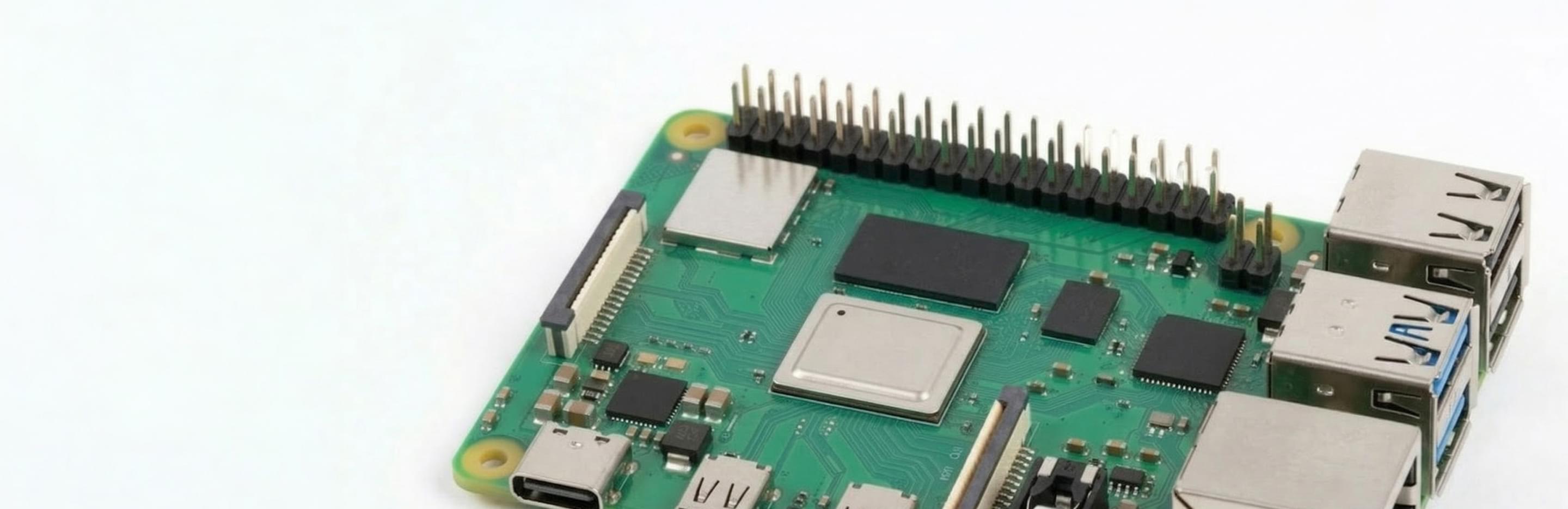
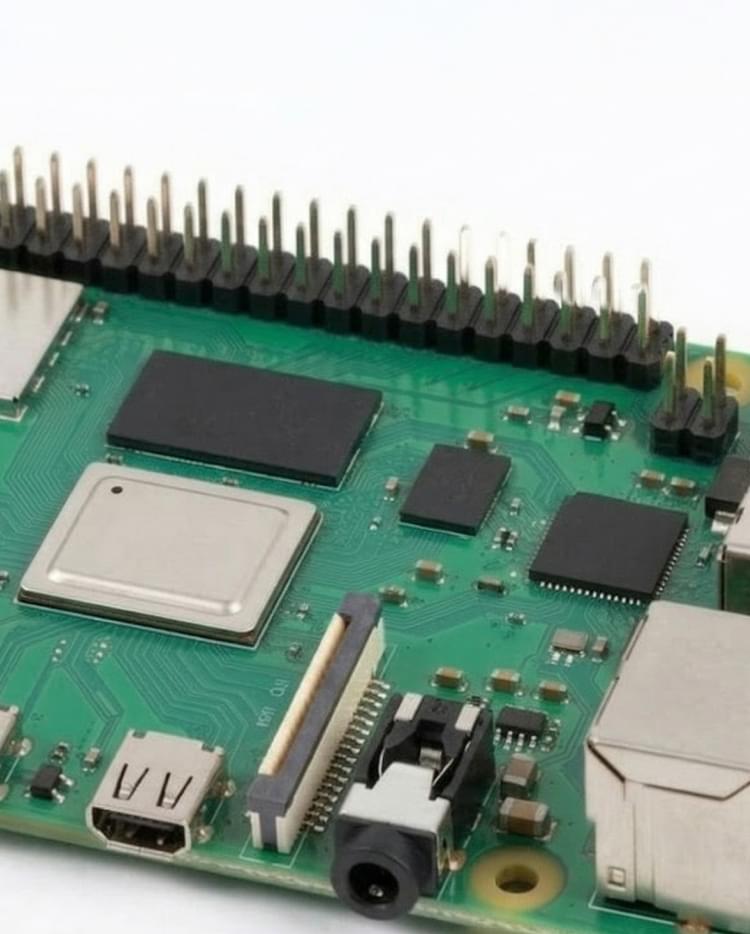
Time series are everywhere, shaping our everyday lives—both professionally and privately. That's why time series models need to run quickly and reliably on many end devices, delivering predictions and classifications. But not every foundation model for time series is edge-capable. In our Edge Lab, we analyze the models, deploy them on various devices, and measure their performance and speed. After all, the industrial reality is PLCs or less powerful devices, and our goal is to find out how well foundation models perform on existing hardware.
Management Summary:
TiRex is faster than Chronos-2 in inference and requires less energy. The forecast quality is only slightly worse.
TiRex is the best model when considering prediction quality (CRPS) and the ratio between latency and energy consumption. This makes TiRex ideal for industrial applications.
Test devices are:
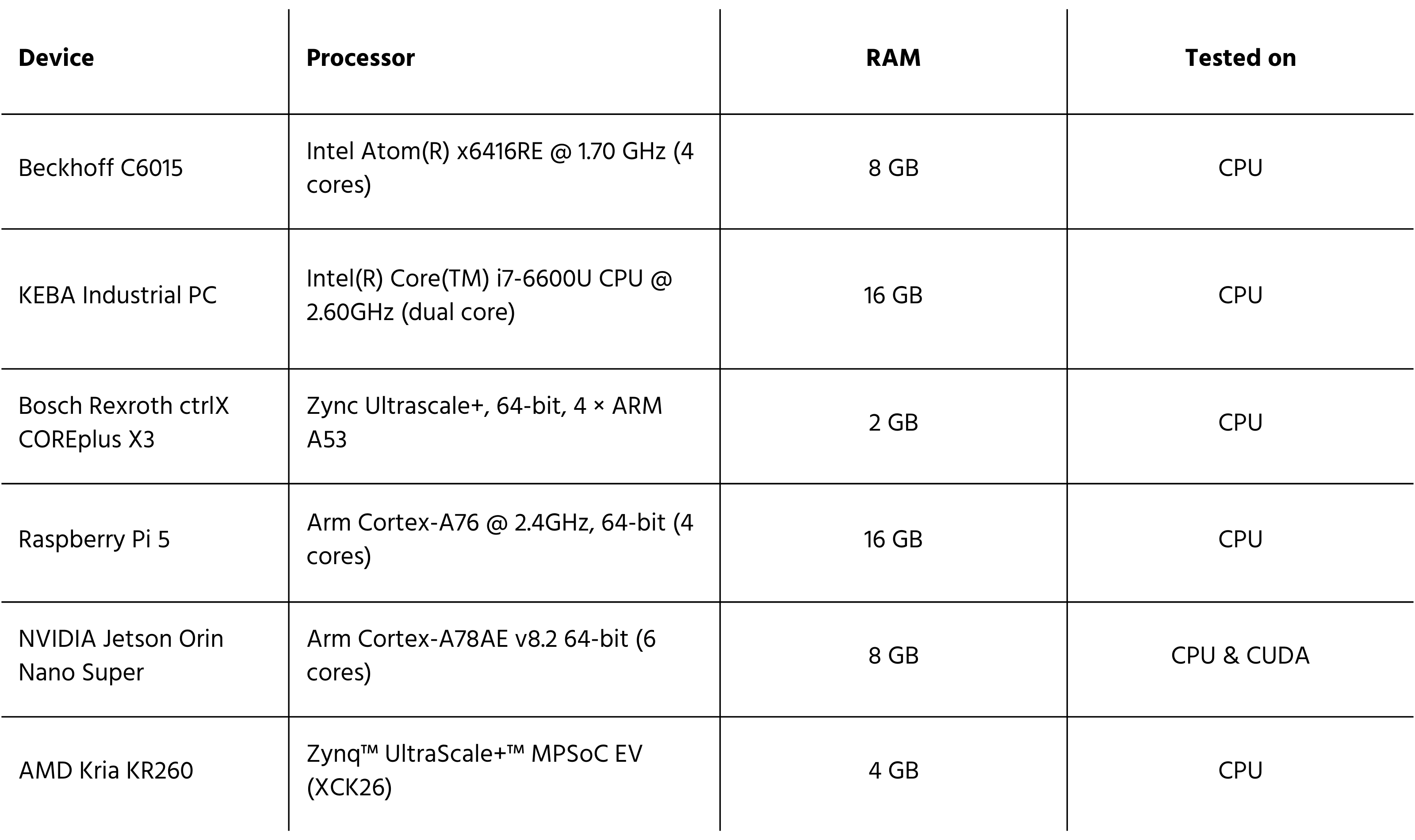

Important: This list is an initial selection and can be expanded as needed, which it will be. Anyone who wants to have their hardware tested is welcome to do so.
The RAM range from 2 GB to 16 GB is striking. Our TiRex model runs smoothly on all devices, but how does it perform compared to its competitors? We compare TiRex on the CPU with Chronos-2, TimesFM-2.5, and PatchTST-FM. The hardware is the industrial PC from KEBA.
The forecasting assumptions:
batch size: 1 (one series at a time)
prediction length: 32 steps
context: 2048 steps
The Results:
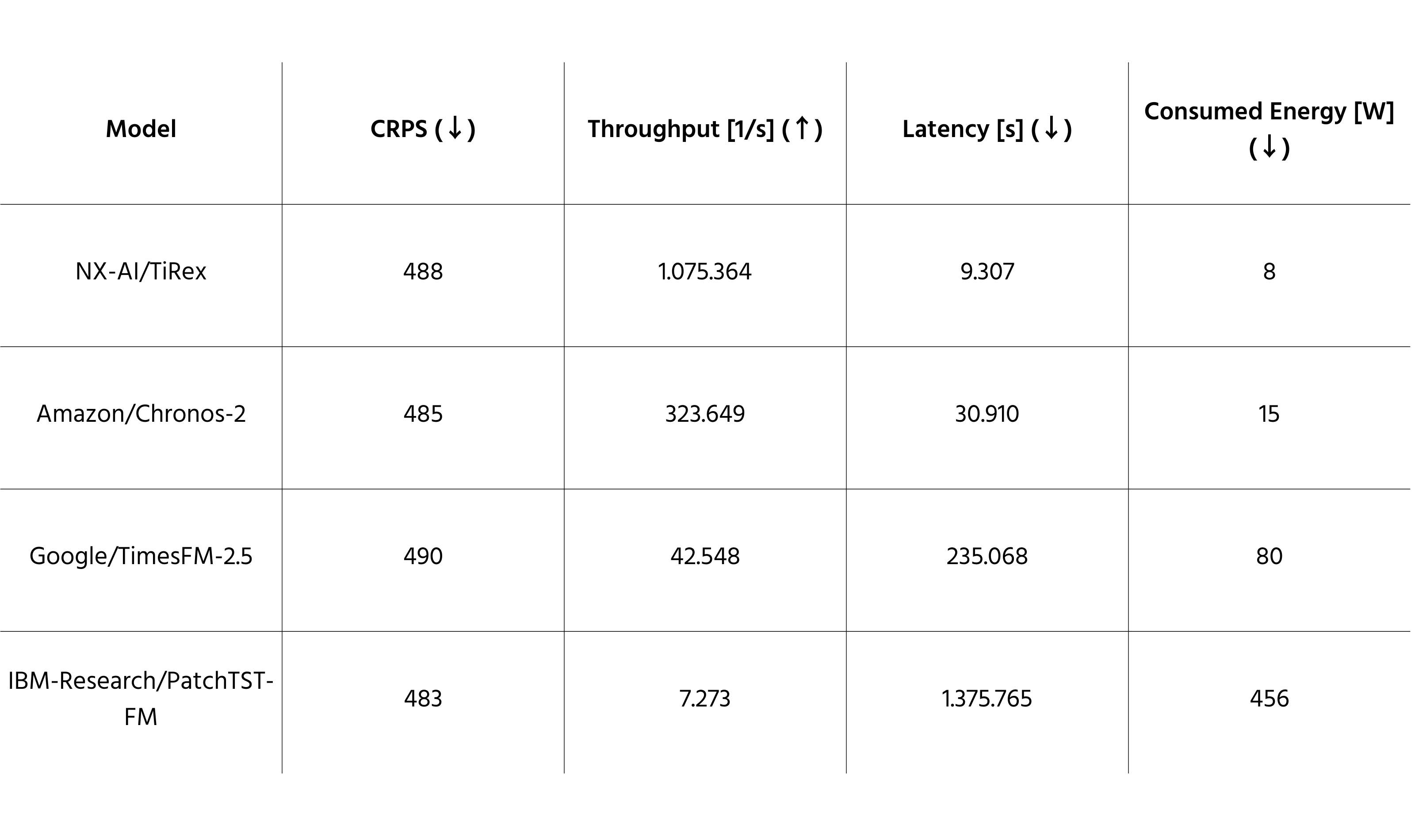

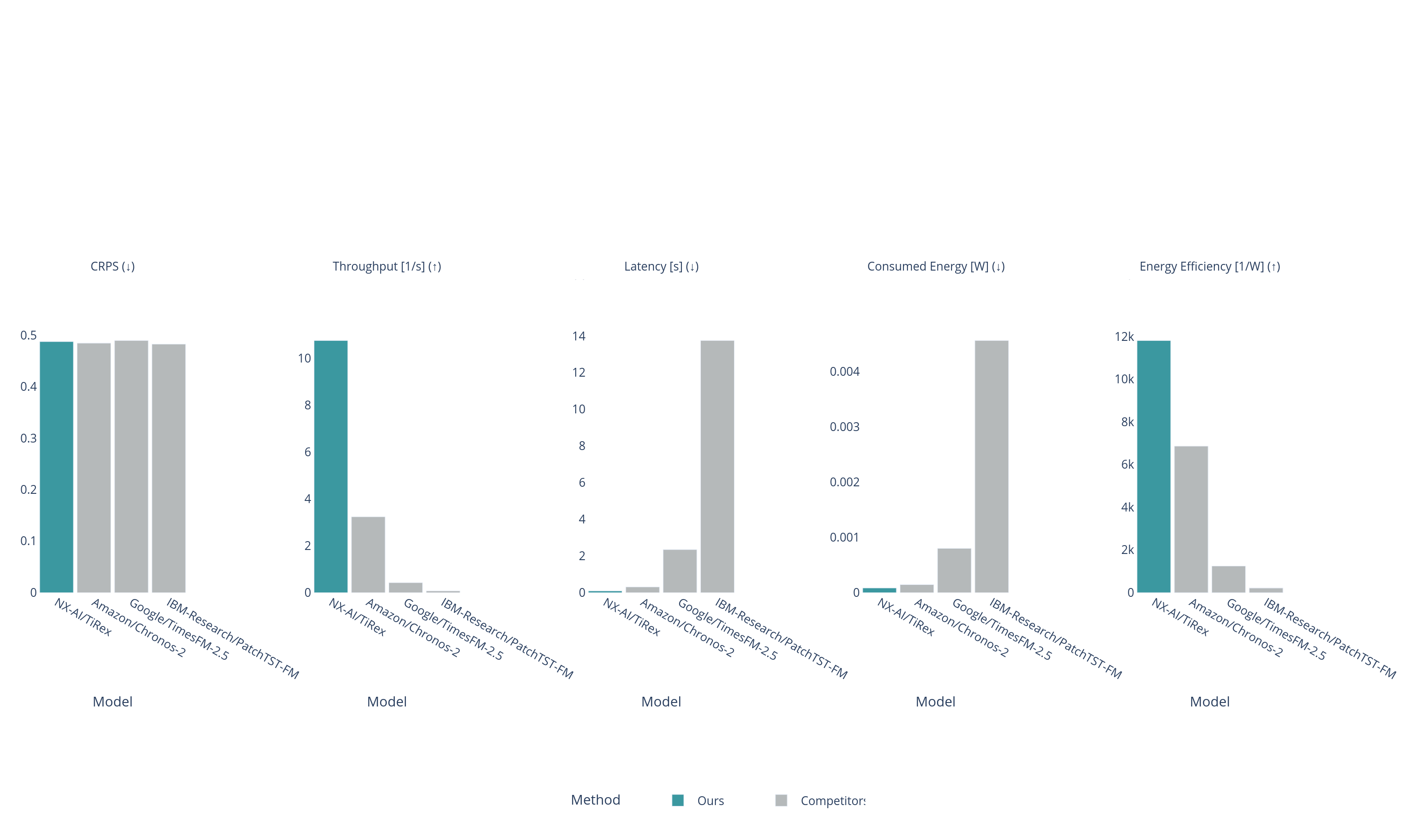
KEBA Industrial PLC
KEBA Industrial PLC
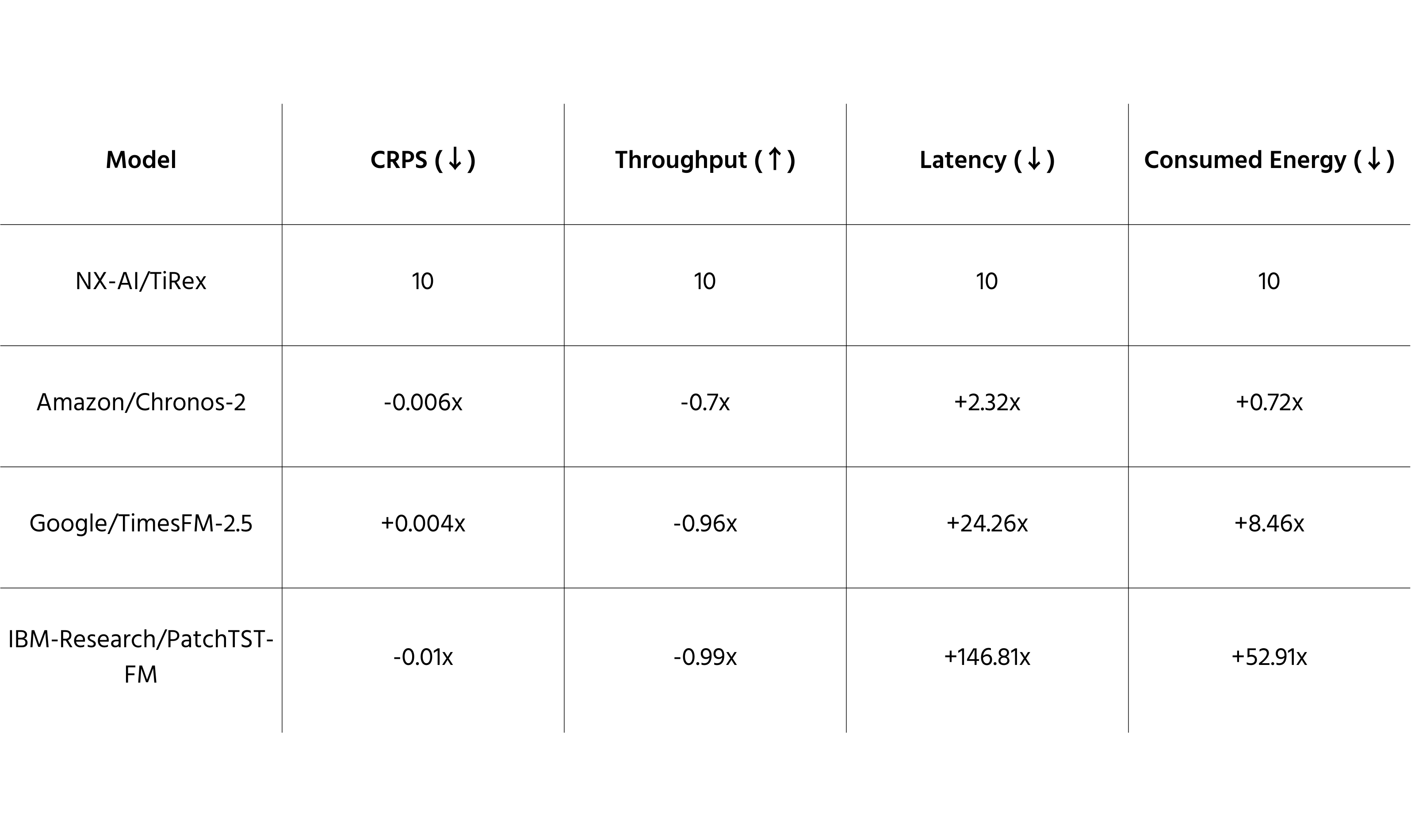
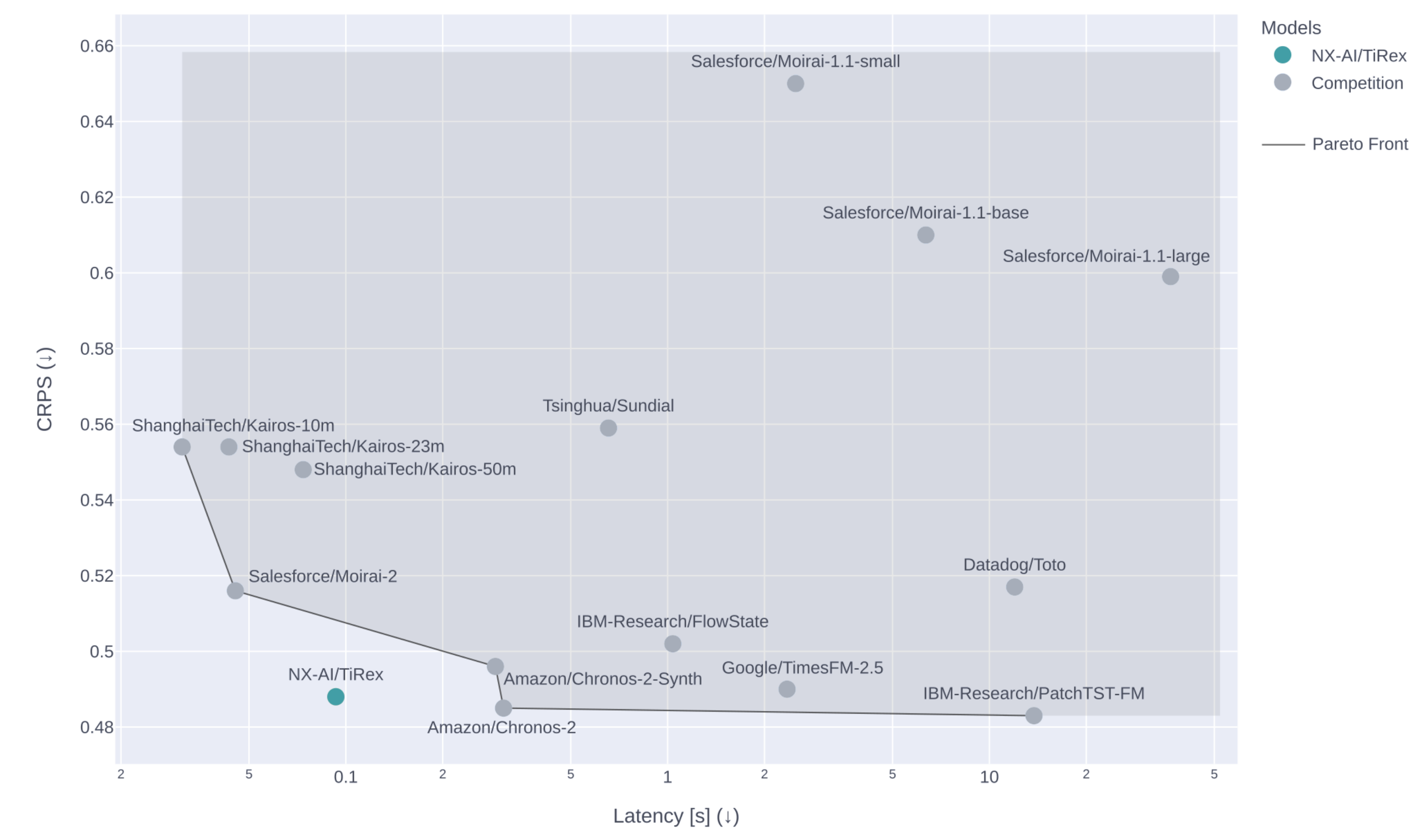
Time Series Model Comparison on KEBA PLC
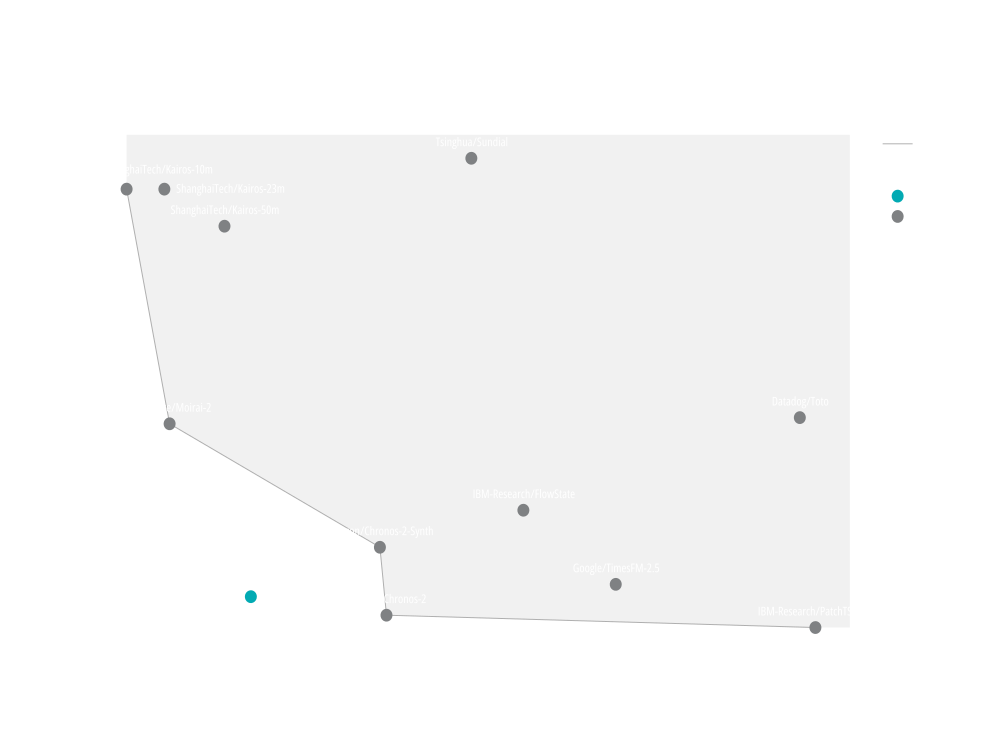
Time Series Model Comparison on KEBA PLC
TiRex is faster than Chronos-2 in inference and requires less energy. The forecast quality is only slightly worse.
TiRex is the best model when considering prediction quality (CRPS) and the ratio between latency and energy consumption. This makes TiRex ideal for industrial applications.